5 Signs Your Outboard Motor Needs Professional Service
5 Signs Your Outboard Motor Needs Professional Service
Your outboard motor is one of the most important components of your boat. Whether you're fishing near Anna Maria Island, cruising the Manatee River, or spending the weekend on Tampa Bay, a dependable engine is essential for getting out on the water and returning safely.
But how do you know when your outboard needs professional attention?
Some engine problems develop gradually, while others appear suddenly. Unusual noises, starting problems, reduced performance, and changes in engine temperature can all indicate that something isn't working correctly.
Recognizing these warning signs early can help prevent additional damage, unexpected breakdowns, and more expensive repairs.
Here are five signs your outboard motor may need professional service.
1. Your Outboard Motor Is Hard to Start
An outboard engine that struggles to start or requires repeated attempts may have an underlying issue.
Occasional starting problems can happen for several reasons, but recurring difficulties shouldn't be ignored.
Common causes include:
- Weak or failing batteries
- Corroded electrical connections
- Fuel delivery problems
- Contaminated fuel
- Worn spark plugs
- Ignition system issues
- Faulty sensors or electrical components
Florida's heat, humidity, and saltwater environment can contribute to corrosion and electrical problems, particularly on boats that spend significant time near coastal waters.
What Should You Do?
Start with basic checks recommended in your owner's manual, such as battery condition, fuel supply, and visible connections.
If the engine continues to struggle, professional diagnostics can help identify the problem.
Repeatedly attempting to start an engine without understanding the cause can drain the battery and potentially worsen certain issues.
2. Your Boat Is Losing Power or Struggling to Accelerate
If your boat no longer accelerates as smoothly as it used to, or the engine struggles to reach its normal operating RPM, something may be affecting performance.
Reduced power can develop gradually, making it easy to overlook until the difference becomes significant.
Potential causes include:
- Restricted fuel filters
- Fuel system contamination
- Ignition problems
- Propeller damage
- Engine management issues
- Mechanical wear
- Excessive hull growth or increased boat load
Not every performance issue originates inside the engine. A damaged propeller, fouled hull, or changes in weight distribution can also affect acceleration and speed.
What Should You Do?
Pay attention to when the problem occurs.
Does the engine hesitate when accelerating? Does it run normally at idle but struggle under load? Is it unable to reach the manufacturer's recommended wide-open-throttle RPM range under appropriate operating conditions?
These details can help a marine technician narrow down the possible causes.
Avoid continuing to operate an engine that is experiencing significant power loss or abnormal behavior until the issue has been evaluated.
3. Your Outboard Is Overheating or Displaying Temperature Warnings
Overheating is one of the most important warning signs to take seriously.
Outboard engines rely on properly functioning cooling systems to maintain safe operating temperatures.
If cooling water flow becomes restricted or a component fails, engine temperatures can rise and potentially cause serious damage.
Possible causes include:
- Worn or damaged water pump impellers
- Blocked cooling passages
- Debris obstructing water intakes
- Thermostat problems
- Cooling system corrosion
- Other mechanical or sensor-related issues
What Should You Do?
If your outboard displays an overheating alarm or warning, follow the manufacturer's instructions and stop operating the engine as directed.
Do not continue running the motor in an attempt to reach your destination if doing so risks engine damage. Arrange assistance when necessary.
A marine technician can inspect the cooling system and determine whether components need cleaning, repair, or replacement.
Why Cooling System Maintenance Matters in Florida
Boats operating in Tampa Bay, the Manatee River, and surrounding coastal waterways may encounter saltwater, sand, sediment, and marine debris.
These conditions make routine cooling system maintenance particularly important.
Flushing and servicing the engine according to the manufacturer's recommendations can help reduce preventable problems.
4. Your Engine Is Making Unusual Noises or Vibrating Excessively
You become familiar with how your boat normally sounds and feels.
If you notice a new knocking, rattling, grinding, or excessive vibration, it may be a sign that something needs attention.
Possible causes include:
- Damaged propeller blades
- Fishing line wrapped around the propeller shaft
- Loose or worn components
- Engine mounting issues
- Lower unit problems
- Internal mechanical problems
Some vibrations may be related to relatively straightforward issues, while others can indicate more serious damage.
What Should You Do?
If you notice a significant change in engine noise or vibration, reduce operation and follow appropriate safety procedures.
A visual inspection may reveal obvious propeller damage, but internal or lower unit problems generally require professional evaluation.
Avoid reaching near moving components or attempting inspections while the engine is running.
5. Your Outboard Is Using More Fuel Than Normal
An unexpected increase in fuel consumption can indicate that your engine or boat isn't operating efficiently.
Fuel usage naturally changes with speed, load, weather, water conditions, and how the boat is operated.
However, a noticeable increase under similar conditions may deserve further investigation.
Potential causes include:
- Fuel system problems
- Ignition issues
- Sensor or engine management faults
- Propeller problems
- Excessive hull fouling
- Maintenance-related performance issues
What Should You Do?
Compare fuel usage under similar operating conditions rather than relying on a single trip.
If fuel consumption has increased alongside rough running, reduced power, or starting difficulties, schedule an inspection.
If you suspect a fuel leak or notice a strong fuel odor, stop operating the boat and address the safety concern immediately.
Other Signs Your Outboard May Need Service
Not every engine problem fits neatly into one of the five categories above.
Other warning signs include:
- Rough or unstable idling
- Repeated engine alarms
- Unexpected stalling
- Visible fuel or oil leaks
- Difficulty shifting
- Corrosion around electrical connections
- Abnormal exhaust smoke
- Water contamination in fuel
- Problems with trim or tilt operation
Even if the boat is still running, these symptoms can indicate developing problems.
A professional inspection can help determine whether the issue requires immediate repair or can be addressed during scheduled maintenance.
How Often Should You Service an Outboard Motor in Florida?
Many outboard manufacturers specify routine service intervals based on operating hours or elapsed time, commonly including annual or 100-hour maintenance for certain items.
However, the correct schedule depends on the engine manufacturer, model, age, operating conditions, and specific maintenance task.
Some components require inspection or replacement at different intervals.
Boats used frequently in saltwater, stored in the water, or operated under demanding conditions may require additional attention.
Always follow the maintenance schedule for your particular engine.
Common Outboard Maintenance Services
Depending on the engine and service interval, maintenance may include:
- Engine oil and filter changes
- Gearcase lubricant replacement
- Fuel filter inspection or replacement
- Water pump inspection and service
- Spark plug inspection
- Anode inspection
- Propeller and lower unit inspection
- Lubrication of specified components
- Diagnostic checks
- Inspection for corrosion and leaks
Routine maintenance helps identify developing issues before they result in an unexpected breakdown.
Can You Diagnose Outboard Motor Problems Yourself?
Some basic checks can be performed by boat owners using the manufacturer's instructions.
For example, you may be able to inspect battery connections, check fuel levels, or identify visible propeller damage.
However, modern outboards use sophisticated electronic control systems that may require specialized diagnostic equipment and manufacturer-specific procedures.
A warning alarm or fault code can point toward a problem, but it doesn't always identify the exact component that needs repair.
Replacing parts without proper diagnosis can lead to unnecessary expenses and may leave the original issue unresolved.
Professional diagnostics are especially valuable when dealing with intermittent problems, electrical faults, or reduced engine performance.
Why Professional Outboard Diagnostics Matter
Outboard problems can have several possible causes that produce similar symptoms.
For example, an engine that hesitates during acceleration may have a fuel delivery issue, ignition problem, sensor fault, or another mechanical concern.
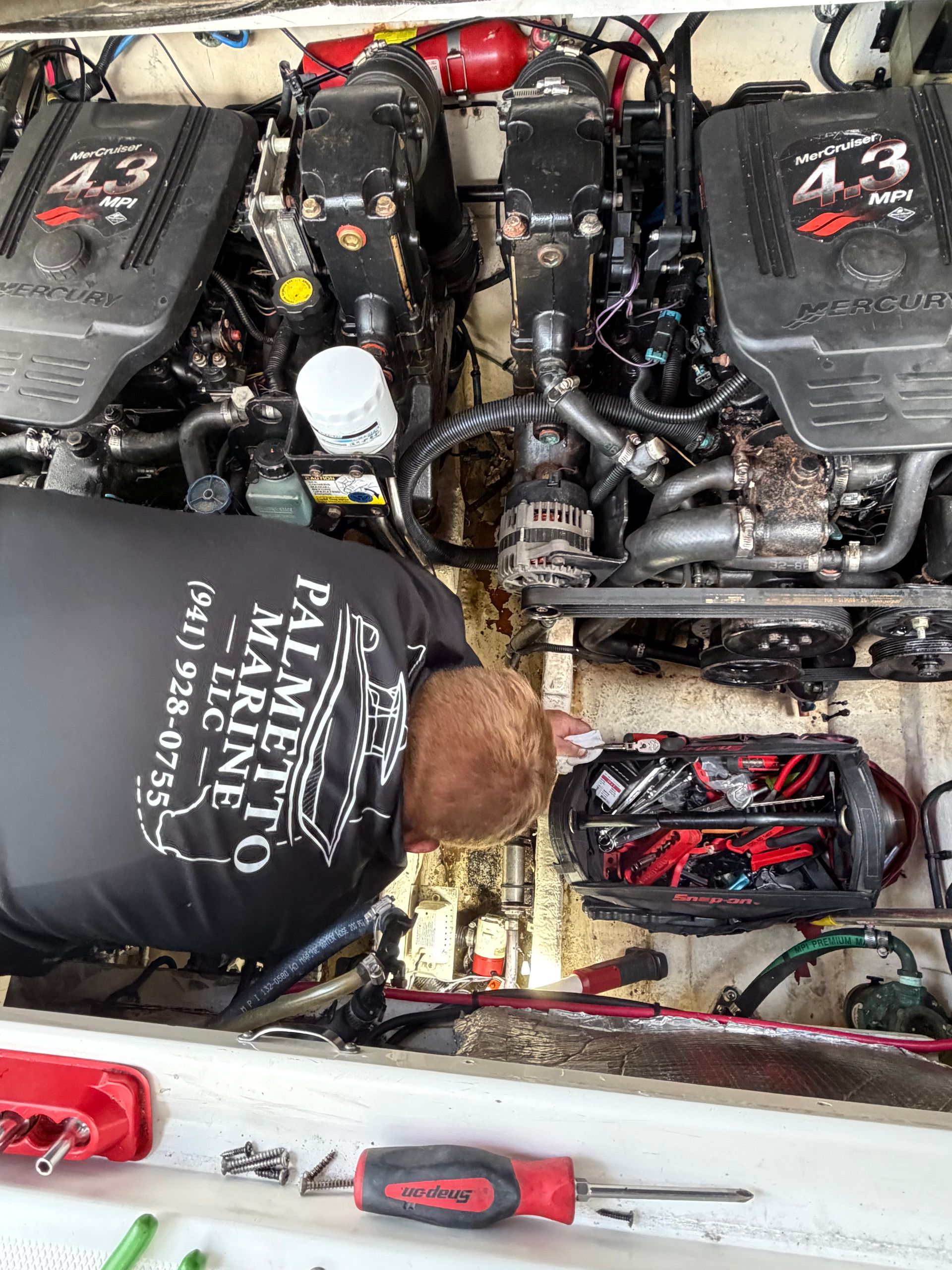
A qualified marine technician can evaluate the symptoms, inspect relevant systems, and use appropriate diagnostic procedures to narrow down the cause.
Palmetto Marine LLC works with major outboard brands, including Yamaha, Mercury, and Suzuki, and provides maintenance, diagnostics, and repair services for boat owners throughout the Manatee County area.
Having the engine properly evaluated helps ensure that repairs address the actual problem rather than relying on guesswork.
Frequently Asked Questions
What are the signs of a bad outboard motor?
Common warning signs include hard starting, rough idling, loss of power, overheating, unusual noises, excessive vibration, and repeated engine alarms. These symptoms don't necessarily mean the engine needs replacement, but they should be investigated.
Why does my outboard run fine at idle but lose power under load?
Possible causes include fuel delivery restrictions, ignition issues, propeller problems, or mechanical faults. Professional diagnostics can help determine why the engine struggles under load.
How do I know if my outboard water pump is failing?
Overheating warnings, inadequate cooling water flow, or abnormal engine temperatures can indicate cooling system problems. However, water pump condition cannot always be determined from the telltale stream alone.
Is it safe to run an outboard with an engine warning alarm?
It depends on the warning, but alarms should never be ignored. Follow the manufacturer's instructions. Certain warnings require immediately reducing power or shutting down the engine to prevent damage.
How often should I have my Yamaha, Mercury, or Suzuki outboard serviced?
Follow the maintenance schedule for your specific engine model. Many routine service tasks are scheduled annually or at specified operating-hour intervals, but requirements vary.
Can a marine mechanic service my boat at the dock?
Some maintenance, inspections, and repairs can be performed dockside, depending on the work required and site conditions. Palmetto Marine LLC offers mobile and dockside marine services for eligible projects.
Outboard Motor Service in Palmetto, Bradenton, and Anna Maria Island, FL
If your outboard is difficult to start, losing power, overheating, or displaying warning alarms, it's important to identify the cause before the problem becomes more serious.
Palmetto Marine LLC provides professional outboard maintenance, marine diagnostics, repairs, and related boat services throughout Palmetto, Bradenton, Anna Maria Island, Longboat Key, Parrish, Ellenton, and surrounding areas.
Our team works with Yamaha, Mercury, Suzuki, and other marine systems to help boat owners keep their vessels operating reliably.
Whether you're dealing with a specific engine problem or need routine maintenance before your next trip, we're here to help.
Contact Palmetto Marine LLC today to discuss your outboard motor and schedule professional marine service.
Visit www.palmettomarinellc.com to learn more about our marine maintenance and repair services.