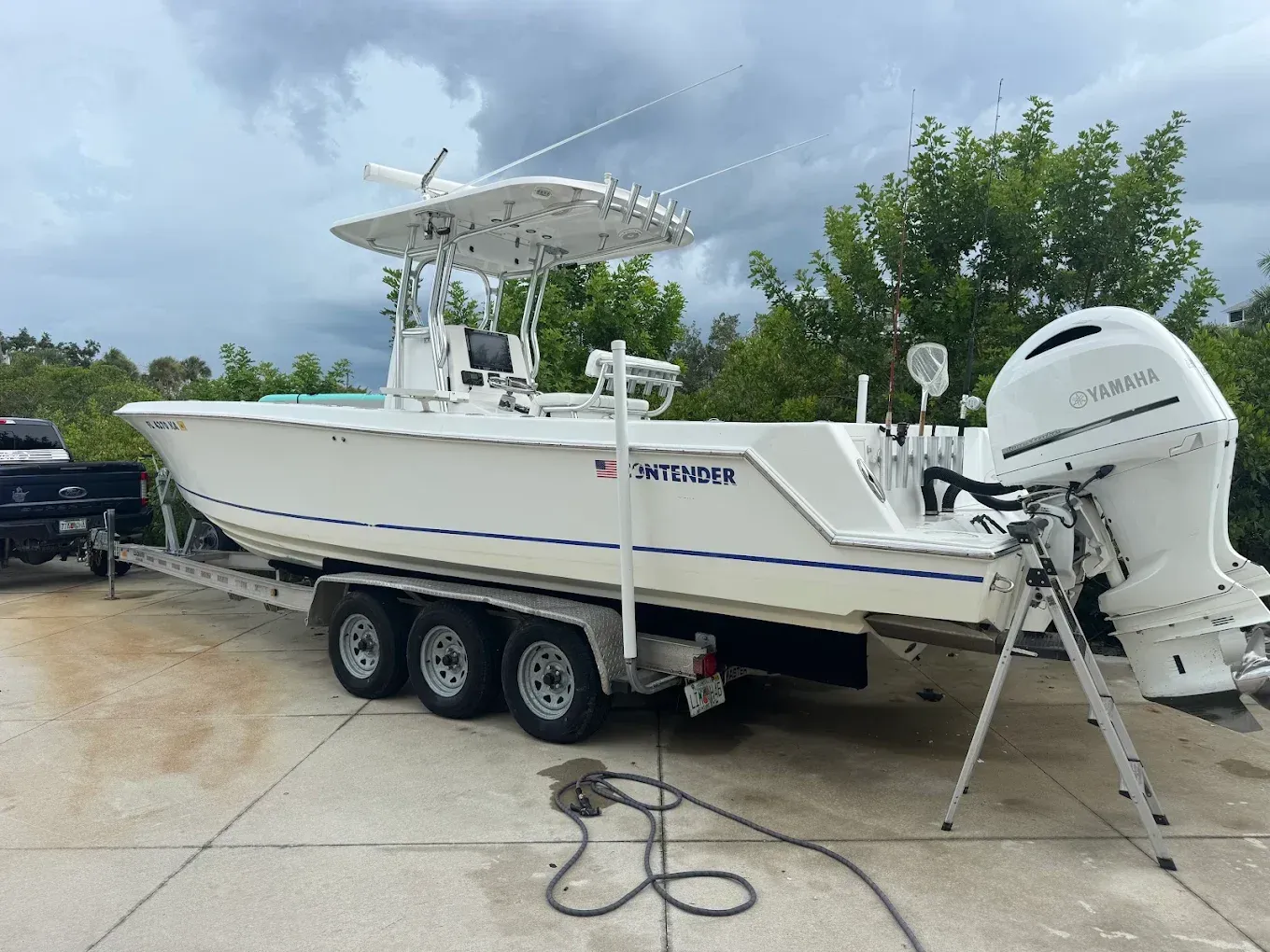
Why Won't My Outboard Motor Start? 7 Common Causes
Why Won't My Outboard Motor Start? 7 Common Causes
There's nothing more frustrating than getting ready for a day on the water, turning the key, and realizing your outboard motor won't start.
Whether you're launching your boat in Bradenton, heading out from Palmetto, or preparing for a trip around Anna Maria Island, an engine that refuses to start can quickly interrupt your plans.
Fortunately, not every starting problem means your outboard needs a major repair.
Dead batteries, fuel delivery issues, electrical connections, and safety switches are among the common reasons outboard engines fail to start.
Understanding the possible causes can help you identify simple problems and recognize when it's time to call a professional marine mechanic.
Here are seven common reasons your outboard motor won't start and what you should check.
1. Your Boat Battery Is Dead or Weak
A weak or discharged battery is one of the first things to investigate when an outboard engine won't start.
Depending on the engine and electrical system, you may notice:
- The engine doesn't crank when you turn the key.
- You hear a clicking sound.
- The starter turns slowly.
- Electronics appear dim or lose power.
- The engine cranks inconsistently.
Even if your boat's lights or electronics turn on, the battery may not have enough available power to crank the engine.
What Should You Check?
Start by checking that the battery switch is in the correct position.
Inspect accessible battery terminals for loose connections or visible corrosion.
If you have the appropriate equipment and know how to use it safely, battery voltage and condition can be tested.
Keep in mind that a battery may show voltage but still fail under load.
If the battery repeatedly loses its charge, the problem could involve the battery itself, charging system, wiring, or an electrical component.
A marine mechanic can perform further testing to determine the cause.
2. The Emergency Stop Switch Is Disengaged
Many boats have an emergency engine shutoff switch, sometimes called a kill switch or engine cut-off switch.
This safety feature is designed to stop the engine when activated.
If the switch or lanyard isn't correctly positioned, the engine may crank without starting or may not operate as expected, depending on the model.
What Should You Check?
Make sure the emergency stop switch and lanyard are properly engaged according to your engine's operating instructions.
This is a simple item to check before assuming something more serious is wrong.
Never bypass or disable an engine safety device to get the motor running.
3. Your Outboard Isn't Receiving Fuel
An outboard engine needs a reliable supply of clean fuel to start and operate properly.
Fuel delivery problems can prevent the engine from starting even when the battery and starter are functioning normally.
Possible causes include:
- An empty or low fuel tank
- A closed fuel valve
- A disconnected or damaged fuel line
- A clogged fuel filter
- A fuel pump problem
- Restricted fuel flow
- Air entering certain fuel systems
What Should You Check?
Verify that the fuel tank contains enough fuel.
Inspect accessible fuel connections for obvious problems and confirm that any required fuel valves are positioned correctly.
If your engine uses a primer bulb, follow the manufacturer's instructions for its proper operation.
Never continue troubleshooting around leaking fuel, strong fuel odors, or damaged fuel lines.
Fuel system repairs should be handled carefully because gasoline vapors present a fire and explosion hazard.
4. Water or Contamination Is in the Fuel
Fuel contamination is another possible reason an outboard engine may struggle to start.
Boats operating in Florida's coastal environment can be exposed to moisture, humidity, and changing storage conditions.
Water or debris entering the fuel system may interfere with normal engine operation.
Symptoms can include:
- Difficulty starting
- Rough idling
- Hesitation
- Engine stalling
- Loss of power
- Inconsistent performance
What Should You Check?
If your boat has a serviceable fuel-water separator, inspect it according to the manufacturer's instructions.
Some systems have indicators or inspection procedures that can help identify contamination.
Avoid opening fuel components or draining gasoline unless you can follow the correct safety procedures.
If contaminated fuel is suspected, professional diagnosis may be necessary.
Replacing a fuel filter alone may not solve the problem if contamination remains in the tank or other parts of the fuel system.
5. The Spark Plugs or Ignition System Have a Problem
Gasoline outboard engines require properly timed ignition to start and run.
If spark plugs are worn, fouled, damaged, or otherwise unable to ignite the fuel mixture correctly, starting problems may occur.
Other ignition-related components can also contribute to the issue.
Potential symptoms include:
- Extended cranking
- Rough running
- Misfires
- Poor acceleration
- Difficulty restarting
- An engine that cranks but won't fire
What Should You Check?
Review your engine's maintenance history.
If the spark plugs are overdue for inspection or replacement, they may need attention.
However, spark plugs aren't always the cause of a no-start condition.
Modern outboards use electronic ignition and engine management systems that may require specialized diagnostic equipment.
A marine mechanic can help identify whether the problem involves spark plugs, ignition components, sensors, or another system.
6. The Starter or Electrical System Is Malfunctioning
If you turn the key and the engine doesn't crank, the problem may involve the starting circuit.
Possible causes include:
- A faulty starter motor
- A defective starter relay or solenoid
- Loose electrical connections
- Corroded wiring
- A damaged ignition switch
- A blown fuse
- A problem with the neutral safety switch
Electrical problems can sometimes appear intermittently, making them difficult to diagnose.
What Should You Check?
Confirm that the engine is in neutral and that the controls are correctly positioned.
Inspect accessible connections for obvious corrosion or damage.
If the engine doesn't respond when you attempt to start it, further electrical testing may be required.
Avoid repeatedly attempting to crank the engine if the starter is making unusual noises or the electrical system is behaving abnormally.
A professional can test the starting circuit and identify the faulty component.
7. Your Outboard Has a Sensor or Engine Management Problem
Modern Yamaha, Mercury, Suzuki, and other outboard engines use electronic systems to monitor and control engine operation.
Sensors, wiring, control modules, and other components work together to manage fuel delivery, ignition, and engine performance.
When certain components malfunction, the engine may experience starting difficulties.
Possible symptoms include:
- Warning lights or alarms
- Intermittent starting
- Rough operation
- Reduced engine performance
- Unexpected stalling
- An engine that cranks but doesn't start
What Should You Check?
Pay attention to any warning messages, alarms, or unusual behavior.
Record the symptoms and when they occur.
Don't assume a warning light identifies a specific failed component without proper diagnosis.
Depending on the engine, specialized diagnostic equipment may be needed to retrieve fault information and test the system.
What Does It Mean When Your Outboard Cranks but Won't Start?
If your outboard cranks normally but doesn't start, the starter is turning the engine, but combustion isn't occurring as required.
Possible causes include fuel delivery, ignition, electronic controls, or mechanical problems.
This differs from an engine that doesn't crank at all.
A no-crank condition more commonly directs attention toward the battery, starting circuit, controls, and related electrical components.
Recognizing this difference can help you describe the problem accurately when contacting a marine mechanic.
Why Does My Outboard Start and Then Immediately Shut Off?
An engine that starts briefly and then stalls may have a different problem from one that never starts.
Possible causes include:
- Restricted fuel delivery
- Fuel contamination
- Idle control problems
- Certain sensor faults
- Electrical interruptions
- Other engine management issues
The cause depends on the engine model and operating conditions.
If the problem continues, avoid repeatedly restarting the engine without identifying the issue.
Can Saltwater Cause Outboard Starting Problems?
Saltwater exposure can contribute to corrosion in electrical connections, terminals, and other components.
Over time, corrosion may interfere with reliable electrical operation.
For boat owners around Bradenton, Palmetto, Anna Maria Island, and Longboat Key, regular inspection and manufacturer-recommended maintenance are especially important.
Appropriate freshwater flushing, exterior rinsing, and corrosion prevention practices can help protect marine equipment.
Always follow the specific manufacturer's flushing and maintenance instructions.
When Should You Call a Mobile Marine Mechanic?
Some starting problems can be resolved with basic checks, such as verifying the battery switch, fuel level, or emergency stop switch.
However, professional diagnosis is recommended when:
- The engine repeatedly fails to start.
- You suspect fuel contamination.
- The starter or electrical system isn't working properly.
- Warning alarms or fault messages appear.
- The engine starts but repeatedly stalls.
- You notice fuel leaks or damaged wiring.
- You're unsure how to safely inspect or repair the problem.
A mobile marine mechanic can evaluate many outboard problems at the boat's location, depending on access, equipment, and the repair required.
This can be particularly convenient for boats kept at docks, marinas, or private residences.
How Can You Prevent Future Outboard Starting Problems?
Routine maintenance can help reduce the likelihood of unexpected starting issues.
Keep Up With Engine Maintenance
Follow the manufacturer's recommended maintenance schedule for your specific engine.
This may include spark plug inspection, fuel filter service, lubrication, and other required procedures.
Maintain Your Battery
Inspect battery connections, address corrosion, and monitor battery condition.
Proper charging and storage practices can help reduce unexpected electrical problems.
Protect Your Fuel System
Use fuel that meets the engine manufacturer's specifications.
Follow recommended storage procedures and address suspected contamination promptly.
Inspect Electrical Connections
Saltwater and moisture exposure can contribute to corrosion.
Regular inspection can help identify deteriorating connections before they cause problems.
Address Warning Signs Early
Hard starting, rough idling, hesitation, and intermittent stalling shouldn't be ignored.
Diagnosing these issues early may help prevent additional complications.
Frequently Asked Questions
Why does my outboard motor click but not start?
A clicking sound may indicate a weak battery, poor electrical connection, starter relay problem, or another starting circuit issue. Proper testing is needed to identify the cause.
Why does my outboard crank but not fire?
Possible causes include fuel delivery problems, ignition faults, safety switch issues, or electronic engine management problems.
Can bad gas prevent an outboard from starting?
Yes. Contaminated or degraded fuel can interfere with combustion and normal engine operation.
How do I know if my outboard starter is bad?
A faulty starter may cause clicking, unusual noises, slow cranking, or no cranking. However, battery and wiring problems can create similar symptoms.
Can a bad spark plug stop an outboard motor from starting?
Yes. Worn or fouled spark plugs can contribute to starting problems, although other ignition and fuel system issues may produce similar symptoms.
Can a mobile marine mechanic repair an outboard at my dock?
Many inspections, maintenance services, and repairs can be performed dockside. Some repairs may require shop equipment or additional access.
Should I keep trying to start an outboard that won't run?
Repeated starting attempts can drain the battery or create other problems. If basic checks don't resolve the issue, professional diagnosis is a better approach.
Mobile Outboard Motor Repair in Bradenton, Palmetto, and Anna Maria Island, FL
When your outboard motor won't start, identifying the cause is the first step toward getting back on the water.
Whether you're experiencing a battery problem, fuel delivery issue, electrical malfunction, or another engine concern, proper diagnosis can help avoid unnecessary repairs.
Palmetto Marine LLC provides mobile and dockside outboard motor repair and maintenance services throughout Bradenton, Palmetto, Anna Maria Island, Longboat Key, Parrish, Ellenton, and surrounding communities.
Our team services outboard engines, including Yamaha, Mercury, and Suzuki models.
Having trouble starting your boat motor? Contact Palmetto Marine LLC today to discuss your outboard repair needs and schedule service.